
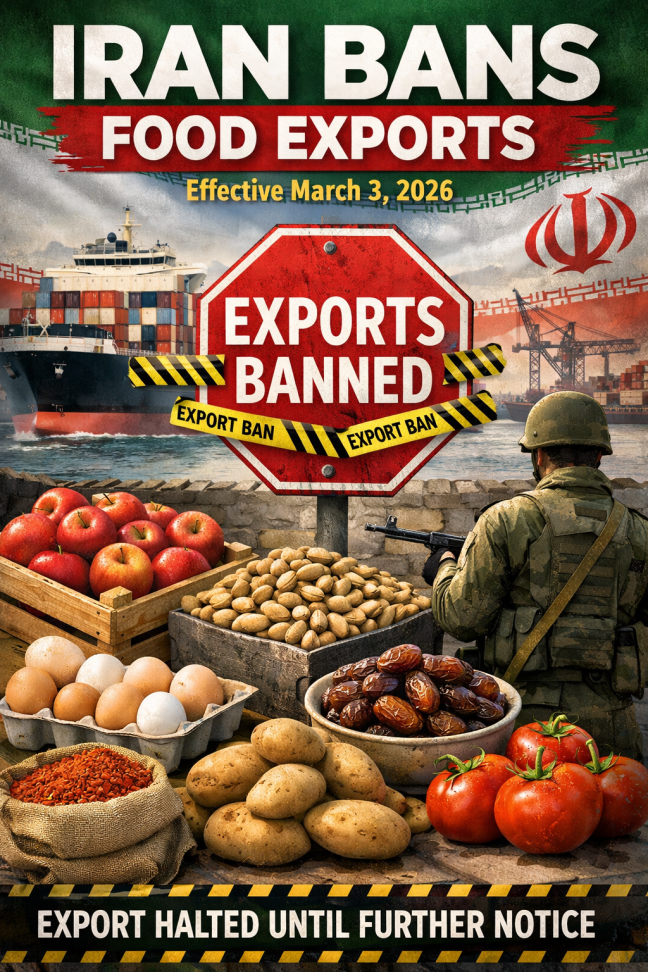
According to Tasnim news agency and major Italian media (“Il Sole 24 Ore”) as of March 3, 2026, 𝐈𝐫𝐚𝐧𝐢𝐚𝐧 𝐠𝐨𝐯𝐞𝐫𝐧𝐦𝐞𝐧𝐭 𝐡𝐚𝐬 𝐢𝐦𝐩𝐥𝐞𝐦𝐞𝐧𝐭𝐞𝐝 𝐚𝐧 𝐢𝐦𝐦𝐞𝐝𝐢𝐚𝐭𝐞 𝐚𝐧𝐝 𝐭𝐨𝐭𝐚𝐥 𝐛𝐚𝐧 𝐨𝐧 𝐭𝐡𝐞 𝐞𝐱𝐩𝐨𝐫𝐭 𝐨𝐟 𝐚𝐥𝐥 𝐟𝐨𝐨𝐝 𝐚𝐧𝐝 𝐚𝐠𝐫𝐢𝐜𝐮𝐥𝐭𝐮𝐫𝐚𝐥 𝐩𝐫𝐨𝐝𝐮𝐜𝐭𝐬.
The ban covers all categories of food and agricultural goods. This follows more localized restrictions placed just days earlier on staples like eggs, tomatoes, potatoes, and dates.
The ban is intended to help prioritize the domestic supply of essential goods and stabilize local prices for the Iranian population.
The ban is effective immediately and will remain 𝐢𝐧 𝐩𝐥𝐚𝐜𝐞 𝐮𝐧𝐭𝐢𝐥 𝐟𝐮𝐫𝐭𝐡𝐞𝐫 𝐧𝐨𝐭𝐢𝐜𝐞.
Iran is a major global exporter of products like 𝐩𝐢𝐬𝐭𝐚𝐜𝐡𝐢𝐨𝐬, 𝐚𝐩𝐩𝐥𝐞𝐬, 𝐚𝐧𝐝 𝐝𝐚𝐭𝐞𝐬. This might create increased risks for fraudulent practices in the sector, especially for pistachios, a raw material that is costly, already heavily adulterated (e.g., mixed with ground nuts of lesser value), and very dependent on Iran’s supply.
Discover more from FOOD LAW LATEST
Subscribe to get the latest posts sent to your email.

[like] Rebecca Kaya reacted to your message:
LikeLike