
This is an article from my LinkedIn newsletter “Food in the Spotlight“
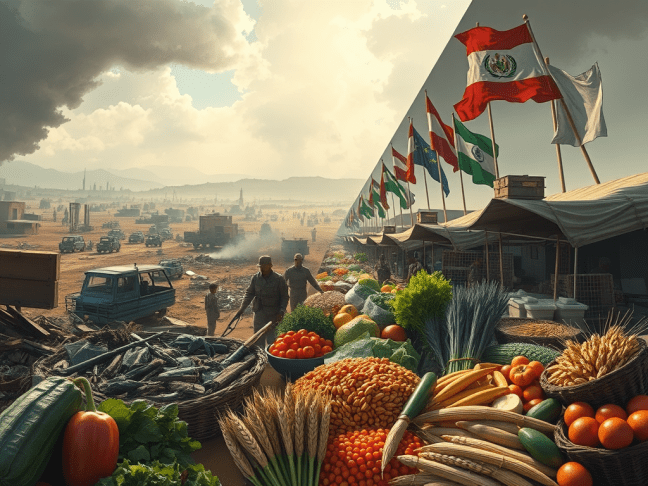
Global food industry executives are no strangers to volatility. But today’s rising geopolitical instability — from wars and trade disputes to sanctions and fragile supply chains — is exposing new cracks in the safety and integrity of our food.
When conflicts, trade wars, and geopolitical chaos disrupt supply chains, the risk of food safety failures and food fraud isn’t a distant hypothetical: it becomes a pressing reality. In this newsletter, we elaborate on my previous articles, trying to guess how global turmoil heightens these risks and what strategic steps industry leaders can take to bolster resilience.
Geopolitical Shocks Strain Global Food Supply Chains
From Eastern Europe to the Middle East and East Asia, geopolitical tremors are shaking up food supplies. The war in Ukraine, for example, upended global grain and vegetable oil markets virtually overnight, sending commodity prices soaring and forcing countries to scramble for alternate suppliers. Sanctions and trade disruptions have further tangled supply lines — Russia’s invasion made it the most sanctioned country in the world, yet parallel trade networks sprang up to keep goods flowing.
Nonetheless, I noticed on my skin the rush to reformulation for most products using vegetable oils as ingredients (e.g., canned foods, bakery goods), financial speculation on grain prices, and stockpiling of such commodities to face volatility or profit from it.
Even beyond active war zones, export bans and trade tensions regularly create shockwaves. But the cumulative effect of the COVID pandemic, the global geopolitical turbulence, the inflation, and now Trump’s ignited trade war has been too much for our supply chain and for food manufacturing low-margin businesses: sky-high prices and spot shortages for key ingredients are only the visible mild symptoms of a much deeper issue, which threatens to explode like a stock bubble. Think about the price of eggs in the USA now that you are reading: in March 2025, it was almost a +100% year-on-year, but commodities like cocoa and coffee did more than double that spike in the last 24 months.
Governments are responding in some countries with emergency measures — a signal of how severe the strain has become.
In Japan, authorities recently passed a new “food supply emergency measures law” empowering the government to direct producers and food businesses to boost production or imports of crucial foods whenever supplies drop and prices spike. This came on the heels of Japan releasing over 200,000 tonnes from its rice stockpiles to tame a price surge, yet staple prices still hit record highs. In fact, Tokyo saw rice prices skyrocket 90% year-on-year in March 2025 — the sharpest climb since the 1970s.
Such extraordinary inflation in a dietary staple underscores how fragile food stability can become under geopolitical and economic duress (in this case, exacerbated by a poor harvest and surging demand). Around the world, food prices have been rising fast due to a convergence of crises — war, supply chain disruptions, even climate-related crop failures — and these high prices and volatility carry a dangerous side effect: they make it more attractive for criminals to introduce cheap, substandard, or counterfeit goods into the market.
Executives in the food sector are thus faced with a two-pronged challenge. First, securing alternative supplies and keeping food affordable amid global upheavals. Second, doing so without compromising on safety and quality, even as cost pressures mount. It’s a delicate balance; as we’ll see, when the focus tilts solely to keeping shelves stocked, the risk of onboard new suppliers and of providing unsafe or fraudulent products slipping through increases.
Regulatory Strain and Shifting Priorities
Geopolitical turmoil doesn’t just disrupt markets — it can also stretch government oversight to the breaking point. Agencies tasked with food safety and quality control have been under-resourced for years now and forced to reallocate attention to different crises. The result? Critical regulatory safeguards may weaken just when we need them most.
A vivid example comes from the United States. Recent budget and policy moves led to significant staff cuts at the Department of Health and Human Services, which directly hit the FDA’s food safety operations.
These cuts — intended as cost-saving “efficiencies” — are raising alarm bells about oversight gaps. The FDA’s Office of Inspections and Investigations reportedly lost 170 staff, including many who oversee international inspection travel. This has tangible impacts: the FDA suspended certain inspections and the quality-control program in its food testing labs, undermining proficiency testing for pathogens and contaminants.
Efforts to improve surveillance (such as enhanced bird flu testing in the food supply) have been put on hold due to a lack of personnel, and this can well open the gate to the next pandemic, of which we can see all the symptoms (weak controls, disease spreading, jumps from species).
Even the FDA’s communications capacity took a hit — the elimination of its media affairs office could slow the alerts and recalls that inform the public of safety issues. In an ironic twist, the agency is now rushing to hire contractors to fill the gaps, starting with roles handling foreign inspection travel, after letting go of seasoned staff, which surely will increase their operational costs over the long term. The head of the FDA’s food division, Jim Jones, resigned in protest over these cuts, warning of the “unpleasant consequences” they could have on keeping food safe and rebuking all the unfounded accusations of corruption for FDA officials.
This U.S. scenario highlights a broader point: regulatory bodies under strain mean higher risks of food safety failures. When governments shift resources elsewhere — be it to address security concerns, economic relief, or simply budget tightening — food oversight can become a casualty.
Europe faces its own challenges; while the EU hasn’t seen an FDA-style staffing crisis, it has been juggling policy shifts to keep the food supply stable. Early in the Ukraine conflict, the EU loosened import restrictions to help get grain out of Ukraine and into global markets, only to later confront quality control issues (more on that soon). During the COVID-19 pandemic and other crises, regulators worldwide postponed routine inspections and relaxed certain rules to prioritize supply continuity. For instance, some European regulators temporarily allowed flexibility in ingredient labeling when war and drought caused sudden shortages — manufacturers could substitute oils or grains without immediate label updates, as long as safety wasn’t compromised. Such measures help avoid empty shelves, but they also demand heightened vigilance. Rapid changes — new suppliers, substitute ingredients, expedited processes — can open cracks in the system if not carefully managed. Any emergency regulatory derogations should be paired with clear risk assessments and parameters to ensure food safety isn’t inadvertently undermined.
The takeaway is clear: don’t assume regulators have it covered in tumultuous times.
Even well-intentioned government actions (or inaction) can increase your exposure to adulterated ingredients: imported, but also bought on your internal market.
Whether it’s an understaffed inspectorate or a hasty policy change, staying abreast of regulatory shifts and contributing a proactive industry voice is key. Engage with authorities and industry associations to support smart policies — for example, advocating that even in crises, food safety funding and international inspections remain priorities. It may fall on companies to voluntarily raise their own standards when public oversight falters. In short, agility and partnership with policymakers can help fill the gaps when the system is under stress.
Grey Markets and Food Fraud on the Rise
Unfortunately, supply instability + weaker oversight = a golden opportunity for food fraudsters. History shows that whenever legitimate supply chains are strained, grey markets and adulterated products inevitably try to fill the void. We are seeing this pattern play out globally today, putting both consumers and brands at risk.
Multiple recent analyses confirm a worrying trend: food fraud is rising. The actual global cost of food fraud is estimated at $10–60 billion per year (depending on studies), and that figure is likely climbing as instability creates new incentives for bad actors.
Why now? Start with grey markets. When official distribution channels break down (due to sanctions, war, or trade barriers), informal and unregulated channels step in. Not all grey market activity is malicious — sometimes it’s parallel imports of genuine products — but even genuine items can pose issues if they bypass normal quality controls (improper storage, expired stock being resold, labeling in foreign languages lacking allergen info, etc.). More nefariously, the chaos provides cover for outright fraud.
Consider the case of Ukrainian grain in Europe: to support Ukraine during the war, the EU temporarily waived tariffs and quotas, leading to a flood of Ukrainian grain into neighboring countries. This well-intended policy had unintended consequences in Poland, where a “grain scandal” erupted. So-called technical grain from Ukraine — meant for industrial use like biofuel, not for food — was imported under lax rules and ended up in the food supply as fodder and flour, unbeknownst to consumers. Inspections found banned pesticides in over a third of these shipments, confirming fears that some grain was of substandard or harmful quality. Polish public outrage soared, fueled by perceptions that Ukrainian grain was “inferior quality and even harmful”. The result was a unilateral ban on Ukrainian grain imports by Poland and several other countries. This incident shows how quickly supply chain vulnerability can turn into food safety lapses and fraud.
Around the world, similar dynamics are at play. Record-high prices for commodities like oils, grains, and dairy create a strong temptation to dilute or substitute expensive ingredients with cheaper ones. High price volatility is a known driver of food fraud. For instance, if vanilla prices surge or olive oil supply tightens, you can bet some suppliers will quietly extend products with synthetics or lower-grade alternatives.
The notorious horsemeat scandal (2013), a case of cheaper horse meat being passed off as beef in ready meals, which many experts linked to economic stress and cost-cutting in supply chains, can already be repeating today (without any of us being aware), since price pressure is arguably much greater. The problem, as usual with frauds, is “where”?
With companies sourcing from new regions to avoid conflict or sanctions, and keen to onboard new suppliers, there is less shared intelligence available, and less historical information to base your food fraud vulnerability assessment.
In short, we have to remember that the supply chain is only as strong as its weakest link, and geopolitical unrest multiplies those weak links.
A new wave of food fraud can directly translate into food safety failures. Regulators and companies must therefore treat fraud prevention as part of the food safety mission. That means meticulous testing and traceability efforts need to be maintained (or increased) during turbulent times. If a supplier suddenly changes or an ingredient is swapped, extra verification steps — from lab routine tests for contaminants, to DNA analysis for species authentication, from isotopic analysis for geographical origins to many other tools — are prudent.
Building Resilience: Strategies for Industry Leaders
In this environment of constant disruption, flexibility and preparedness are the best defense. Food industry executives can’t predict geopolitical crises, but they can ensure their organizations are ready to respond without letting standards slip and stocks be disrupted.
Here are some key strategic and policy-level moves to consider:
- Map and Diversify Your Supply Chain: Know your ingredients’ origins in detail and identify alternate sources (and alternate suitable ingredients) before you need them. Geopolitical risk should be a factor in supplier selection: for example, don’t concentrate critical inputs in one country or region. Diversifying suppliers (and even stockpiling essential ingredients where feasible) can reduce pressure to buy from unknown or risky sources during a crisis. Also, map your supply chain as far as possible; use tools to increase traceability and transparency above and beyond your legal obligations. This transparency makes it harder for fraud to hide and easier to execute targeted audits.
- Strengthen Supplier Verification and Audits: In volatile times, it’s not enough to trust that your supplier has things under control. Increase the frequency and rigor of supplier audits, and insist on quality certifications. If travel is challenging or regulators are inspecting less, consider hiring independent auditors or leveraging technology (like remote video audits or IoT sensor data from facilities). Build in requirements for testing of raw materials upon arrival, especially if you have to onboard a new supplier quickly due to a disruption. Remember, criminals exploit weak links, so fortify those links proactively.
- Enhance Testing and Fraud Detection: Food testing is a frontline defense against both safety hazards and adulteration, but only if you know what you are looking for. Expand your testing protocols when sourcing shifts — for example, if you substitute one type of grain or oil for another, testing for contaminants or additives that wouldn’t normally be present. Utilize advanced analytics and tools for horizon scanning of fraud signals (e.g., unusual pricing anomalies or reports of dilution in the market). The goal is to detect any issue before it enters your production line.
- Revisit Food Fraud Vulnerability Assessments: Many companies conduct annual food fraud vulnerability assessments as part of their food safety plans — these shouldn’t be static. Update those assessments now to account for the current high-risk conditions. As advised by experts, factor in the heightened fraud risk from price volatility and ingredient shortages. Identify which of your materials became significantly pricier or scarcer in the past year — those are prime targets for adulteration. Then update mitigation strategies: perhaps more frequent supplier checks, buying through verified brokers (or not buying from brokers at all), or adding authenticity tests for that product category.
- Enhance Food Safety Culture: Testing and monitoring are nothing without trained and engaged employees who strongly believe that food safety is not negotiable. If you are an executive, even with the most advanced AI and horizon scanning tools on the market, you will be completely blind to moral hazard and food safety compromise, unless you heavily invest in building a culture that makes your employees the first line of defense for any internal or external threat.
- Engage with Policy Shifts (and Shape Them): Keep a close watch on government policy changes in your key markets — both the emergency measures that may affect your operations and the roll-back of oversight that might increase risks. If regulators allow temporary leniencies (e.g., label flexibility or waived import rules), use them judiciously. Just because a rule is relaxed doesn’t mean you should cut corners; maintain internal standards so that quality doesn’t suffer. Conversely, if you see oversight weakening (as with the FDA cuts), consider stepping up your internal compliance auditing to compensate. Use industry coalitions to speak up to governments about the importance of maintaining food safety controls even amid crises. Regulators often welcome industry input on feasible solutions — for instance, offering data or facilities for product testing if official labs are swamped. Public-private collaboration can ensure that short-term crisis measures don’t lead to long-term health fallout. Too often, I see old, static, and reactive lobbying strategies, where industry does not really engage, but mostly creates holes in regulations to later deprecate the legislative quality, or does not engage at all in certain policies to then criticize them. The more under-resourced regulatory agencies are, the more chances you have to step up and influence the process.
- Scenario Planning and Resilience Building: Incorporate geopolitical risk scenarios into your enterprise risk management. What would you do if a key export country suddenly faces sanctions? How would a major regional conflict, trade embargo, or even a cyberattack on logistics affect your ingredient flow? Run simulations and drills for product recall or crisis management, assuming both a contamination issue and a supply crunch happening together — not far-fetched in today’s climate. The more you pressure-test your systems now, the more calmly you can react under real pressure. Build resilience not just in supply chain logistics, but in your corporate culture: emphasize that quality and safety are non-negotiable, at every level, and even when budgets tighten.
Finally, consider avenues like insurance and risk transfer for residual risks you cannot completely control. Some insurers now offer coverage specifically for food fraud or contamination incidents. While insurance doesn’t prevent a crisis, it can provide financial protection and access to expert crisis response resources if the worst occurs. Certain risks are hard to cover, but the process of qualifying for such coverage can be useful because companies might scrutinize your controls, which in turn gives you insight into gaps to fix.
Turning Instability Into Trust
It may feel like we’re navigating one global crisis after another — because we are. Instability isn’t just a risk factor — it’s the environment we’re operating in, and food industry leaders must adapt accordingly. The encouraging news is that companies that invest in robust safety and authenticity measures now stand to emerge stronger. In times of turmoil, consumers and business partners look for brands they can trust. The trust in public authorities is at a historical minimum. Earning that trust as a company will pay dividends. In other words, resilience and integrity are not just risk mitigators — they are competitive advantages. Besides price, trust in the brand is one of the key drivers of repeated purchases for a credence product like food.
By recognizing the link between geopolitical events and food safety, executives can stay one step ahead. That means reading the headlines a little differently. A port closure, a new sanction, a budget cut at a food agency: what looks like foreign policy news is often the first clue that something is about to break in your operations. It requires a broadened lens that mixes world affairs into quality assurance. By engaging with policymakers, reinforcing your supply network, and doubling down on compliance even when the external pressure is high, you protect not only public health and your brand but also contribute to a more stable food system globally.
In summary, geopolitical instability and food safety are now interlinked challenges. Leading in this environment calls for strategic foresight and firm commitment to quality. It’s about turning heightened risk into heightened diligence, which can be converted into heightened trust.
The only certainty is that we do not know what will happen: our brain cannot process and predict all the complex interactions of the moving parts.
Nobody can predict what will happen next, and do not trust whoever is providing you too much certainty (“and usually wears a tie”, N. N. Taleb, Black Swan). A must-read to keep delving into such thoughts? Antifragile, from the same author.
When you do not have answers, I suggest you try to focus on asking yourself high-quality questions.
Discover more from FOOD LAW LATEST
Subscribe to get the latest posts sent to your email.

One thought on “Geopolitical Instability: The Hidden Threat to Food Safety and Integrity”